31 Universities. 5 Key Insights. One Report.
CampusIQ and Huron surveyed higher education institutions across North America to uncover how space management strategies are shifting. Five key insights emerged.
Below is a summary of three of the five insights. Download the report to see the full findings.
Precision Over Growth
The mindset is shifting: space is no longer a growth lever—it's a constrained, high-stakes commitment.
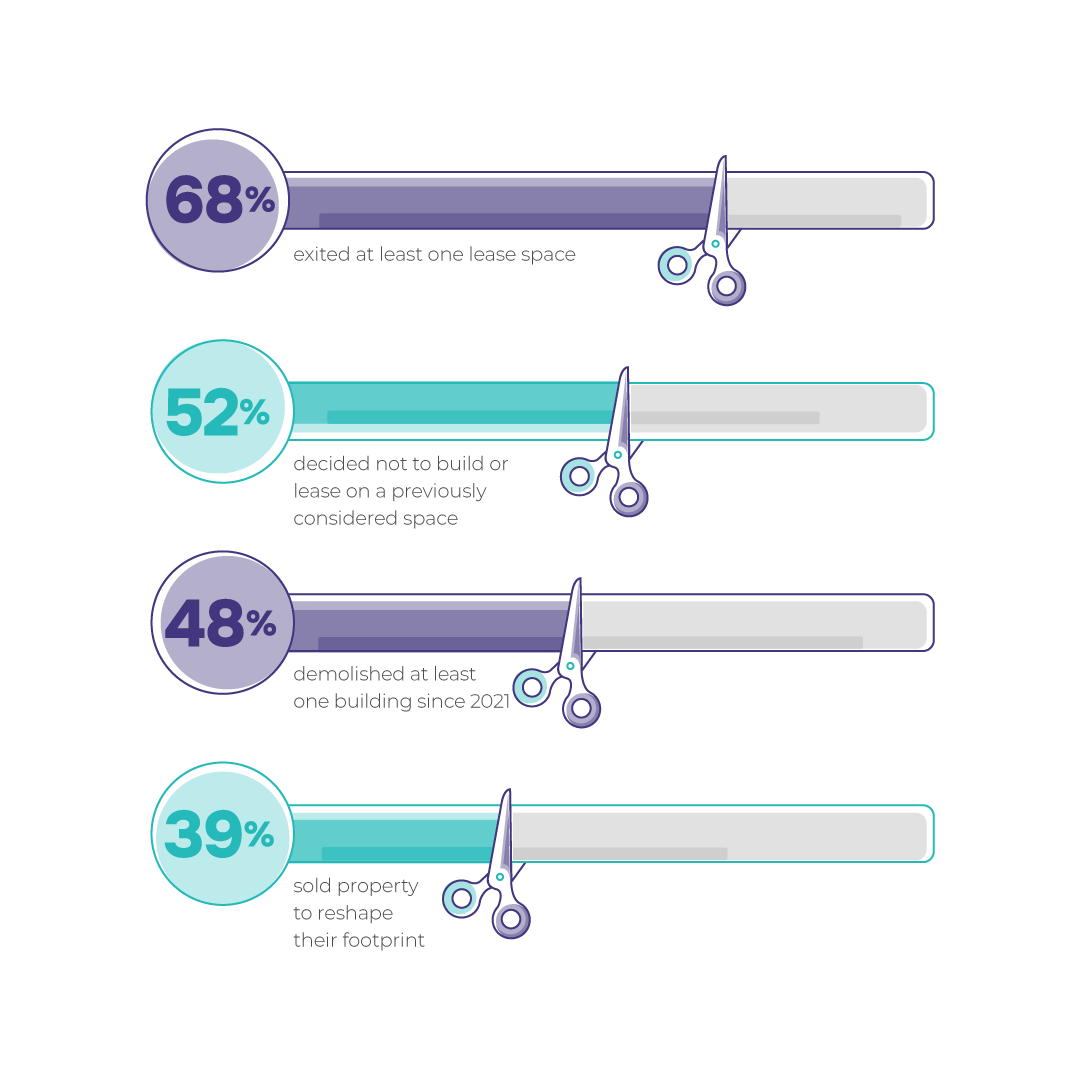
Since 2021, 68% of universities have exited at least one lease, 52% declined to build previously planned space, and 48% demolished buildings. These aren't emergency cuts—they're strategic decisions backed by data.
What's driving this? Rising deferred maintenance, climbing operating costs, and a new recognition that not all square footage serves the mission equally.
In the report: See how institutions identify underutilized assets, calculate ownership costs, and make divestment decisions.
The Hybrid Mismatch
Hybrid work policies are now standard—90% of universities have them. But physical space allocation hasn't caught up. Only 26% explicitly link on-campus days to whether employees receive dedicated offices, and 48% haven't updated their space guidelines since 2021.
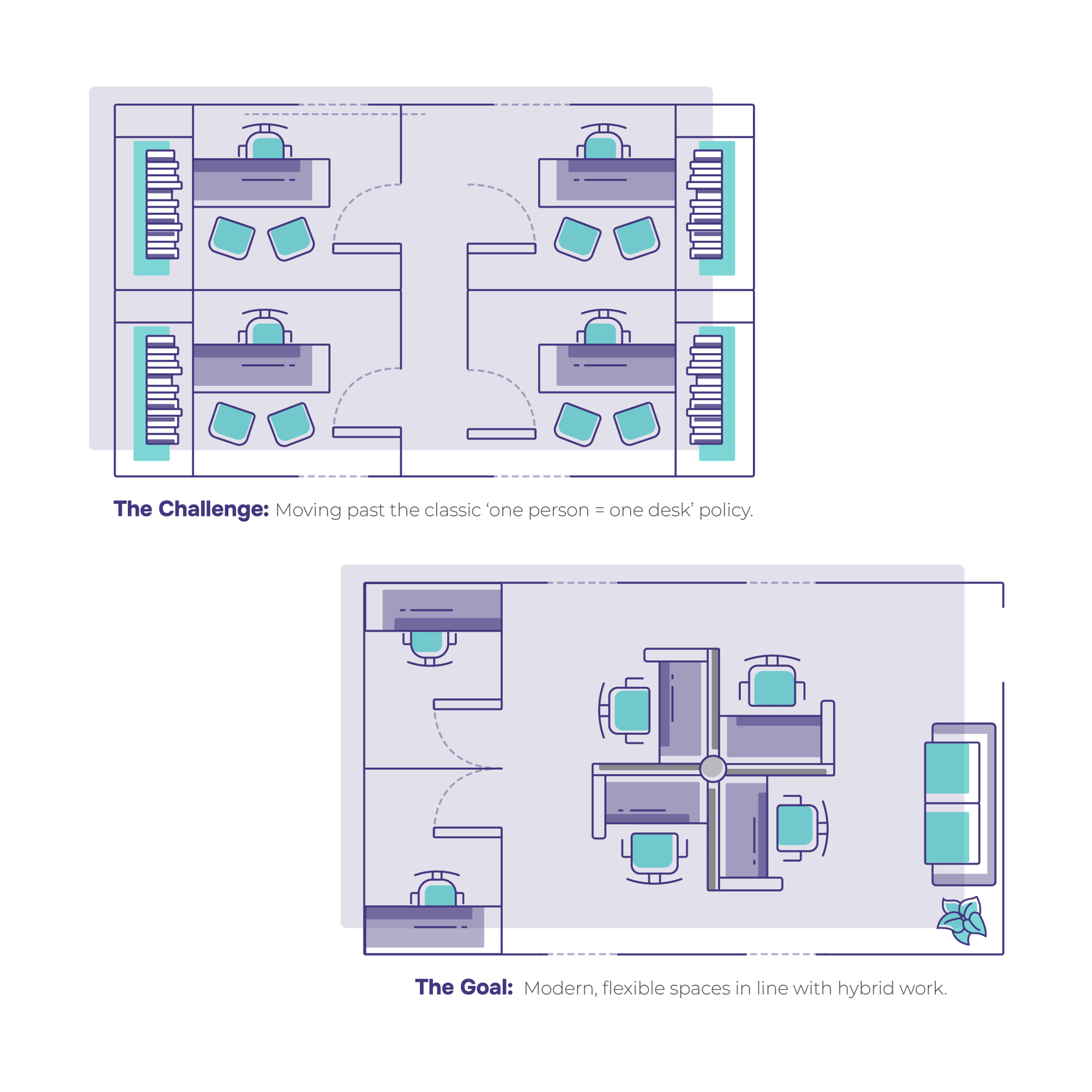
The disconnect? Work patterns have fundamentally changed, but "one person, one office" assumptions still drive space assignments—even when people are only on campus two days a week.
In the report: See how leading institutions are aligning hybrid policies with workspace allocation, creating transition plans that account for lease timelines and renovation costs, and making the cultural shift from "my office" to "our workspace."
Closing the Research Blind Spot
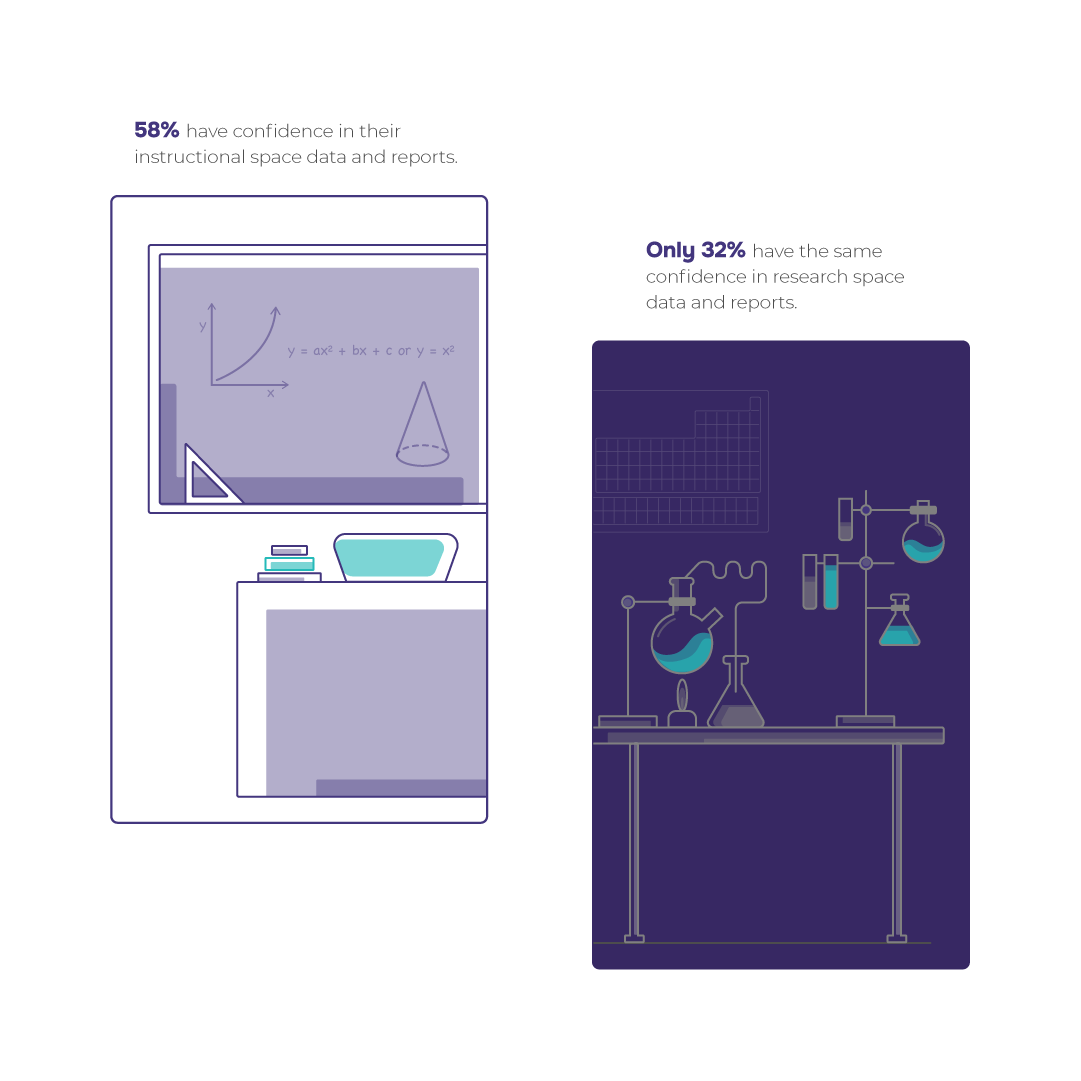
Universities have strong data on classrooms—58% express confidence in their instructional space reporting. But confidence drops to just 32% for research facilities, and only 10% regularly calculate research dollar density (funding per square foot).
The problem? Research labs are often the most expensive space on campus, yet they remain under-analyzed and under-reported compared to teaching spaces.
In the report: Discover how institutions are defining productivity metrics for research space, extending occupancy analytics to lab environments, and bringing research facilities into the same governance conversations that guide instructional space decisions.
Honest Insights from Higher Ed Leaders
The report features candid perspectives from facilities directors, provosts, and space planners at leading universities—unfiltered views on the challenges reshaping campus space management.
"Space is expensive. The value of our facilities' GSF far exceeds our endowment and is central to the strength of our brand. Effective utilization of every square foot is essential to academic success."
"Hybrid work is now embedded, but unfortunately alongside the dated 'one person, one desk' space utilization model."
"Instructional space is easiest to measure given registrar data. Research labs and offices are notoriously harder to truly measure (though we are working to improve on both fronts)."
Survey respondents include institutions managing 5+ million square feet, operating multiple campuses, and representing 70% R1/R2 research universities. Only 35% are CampusIQ customers. Survey responses were collected in September and October of 2025 by Huron.