4 min read

The Old Dog and the New Tricks: AI for Non-Technical Employees

The Old Dog and the New Tricks: AI for Non-Technical Employees
September 21, 2026

The Old Dog and the New Tricks I Never Became a Developer. I Just Stopped Doing the Tedious Parts.

I’m 71. I worked as the VP of Client Success at CampusIQ. I’m retiring soon, and I’ve opened more than 100 pull requests. Ninety seven of them are merged and running in production, putting me in the top quartile of non-engineers shipping code at this company.

Ann Henson
What the old dog actually learned

Not how to code. How to look at a repetitive process, describe exactly what needs to happen, recognize when the result is wrong, and know what a useful solution should actually do. The technical barrier got lower. The value of knowing the work didn’t.

The setup

That sentence still sounds ridiculous when I say it out loud.

When CampusIQ started going hard on AI, I assumed it was for the engineers. You know, the people who already lived in terminals and actually understood what all those words meant. I had never opened a terminal without someone standing over my shoulder telling me exactly what to type.

Aaron pushed me anyway, and I’ve told him off more than once for it. Always when I’m alone. In my car. In my office. During my morning shower. I’m not a developer. This is not my job. Stop making me do things I was never supposed to do.

Turns out, I was looking at it the wrong way.

The wrong assumption

I Didn’t Need to Become a Developer

I started mostly out of stubbornness, with maybe a little spite mixed in. There were parts of my job that ate entire afternoons, like pulling the same status updates from a dozen places, rebuilding the same reports every week, and stitching together client narratives by hand.

I knew those processes better than anyone because I was the one doing them over and over again. I knew where the information lived, what mattered, what could be ignored, and what the finished result actually needed to look like. I just didn’t know how to build something that could do the tedious parts for me.

AI changed that.

I still can’t write a for-loop. I still don’t understand half the words in my own pull requests, and I still picture a snake when someone says Python. But I can look at a messy, repetitive process and say, “This is dumb. Here’s what I actually need.”

It turns out that’s a pretty useful skill.

The work

The Problems Were Already Mine to Solve

Some of my pull requests are almost funny in how ordinary they are.

Client risk
One command, three systems

Every open client risk across three systems, pulled in one command instead of stitched together by hand.

The morning digest
Used to eat the first part of my day

The same status updates, pulled from a dozen places every morning. Now it arrives already built.

Renewal signals
Fires when a conversation goes quiet

I know when a renewal conversation going quiet means something and when it doesn’t. Now a trigger catches it instead of my memory.

These aren’t projects an engineer would have been excited to put on a roadmap. They were small, specific problems buried inside client success. More specifically, they were my problems.

That’s what I think gets missed when we talk about non-technical employees using AI. The people closest to the work often know exactly what needs to be fixed. Before, we either kept doing it manually or had to explain the problem to someone technical and wait for them to build a solution.

Now I can build much more of it myself.

The advantage

Experience Became the Advantage

I spent years learning how Client Success works. I know what a customer risk looks like before it becomes a bigger problem. I know which information matters in a report and which information is noise. I know when a renewal conversation going quiet means something and when it doesn’t.

AI didn’t give me any of that.

What it gave me was a way to turn what I already knew into something useful without needing to become a developer first.

That distinction matters. The value I bring to these projects isn’t that I suddenly know how to code. It’s that I understand the problem well enough to describe what needs to happen, recognize when the result is wrong, and know what a useful solution should actually do.

The technical barrier got lower. The value of knowing the work didn’t.

What changed

The Boring Work Stopped Owning My Day

The biggest surprise wasn’t that I could ship something into production. It was what happened to the rest of my job once I started getting repetitive work out of the way.

The status pulls, reports, and follow-ups weren’t individually difficult, but together they took up time and attention that I would rather spend somewhere else. Automating more of that work gave me more room for the parts of Client Success that still need me: judgment, relationships, and the moments when a customer needs someone who’s seen this movie before.

That’s ultimately what made AI useful to me. It wasn’t about turning myself into a technical person at 71. It was about spending less of my time on work that didn’t need 40 years of experience to get done.

The lesson

Maybe the Old Dog Wasn’t the Problem

I’m now shipping more code than some of our kids and grandkids, which is still objectively funny to me.

But I don’t think the lesson here is that a 71-year-old woman learned how to code. I didn’t, really.

I learned that being non-technical didn’t mean I had to accept every tedious process as something I would do by hand forever. The things I already knew about my customers, my team, and my job gave me the hardest part: understanding the problem and knowing what good looks like.

The tools don’t care how old you are.

They don’t care what your title is.

They only care whether you’re willing to describe the problem clearly and stop doing the tedious work by hand.

So yes, the old dog learned some new tricks. But she didn’t have to become a different dog to do it.

About the author
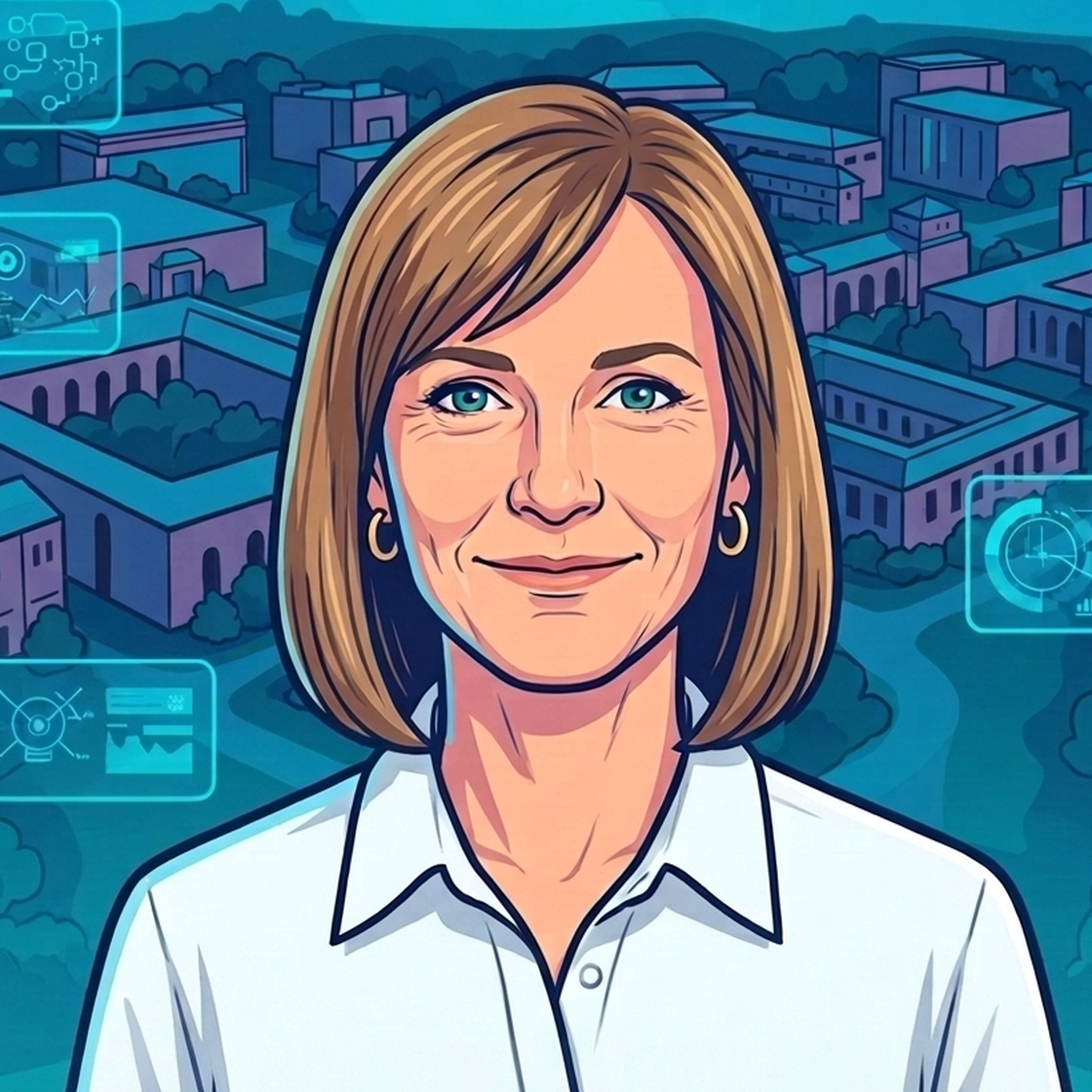
Ann Henson

Ann Henson
Former VP of Client Success, CampusIQ

Ann spent four decades in client-facing work and served as VP of Client Success at CampusIQ. At 71, with no engineering background, she has opened more than 100 pull requests — 97 of them merged and running in production — putting her in the top quartile of non-engineers shipping code at the company. She still pictures a snake when someone says Python.

The Valley: Why AI Adoption Stalls After the First Win

The Valley: Why AI Adoption Stalls After the First Win

Six weeks in, the person who is now our top contributor was ready to quit using AI. The stall after the first win has a name — the valley — and...
Read More
Everybody Ships: How CampusIQ Built an AI-Native Company

Everybody Ships: How CampusIQ Built an AI-Native Company

We set out to see if four engineers, working with AI, could produce like a team five times the size. What we built along the way changed who can...

Read More