5 min read

Occupancy Analytics in Higher Education: Why 60% of Institutions Are Making the Shift

Occupancy Analytics in Higher Education: Why 60% of Institutions Are Making the Shift
9:23


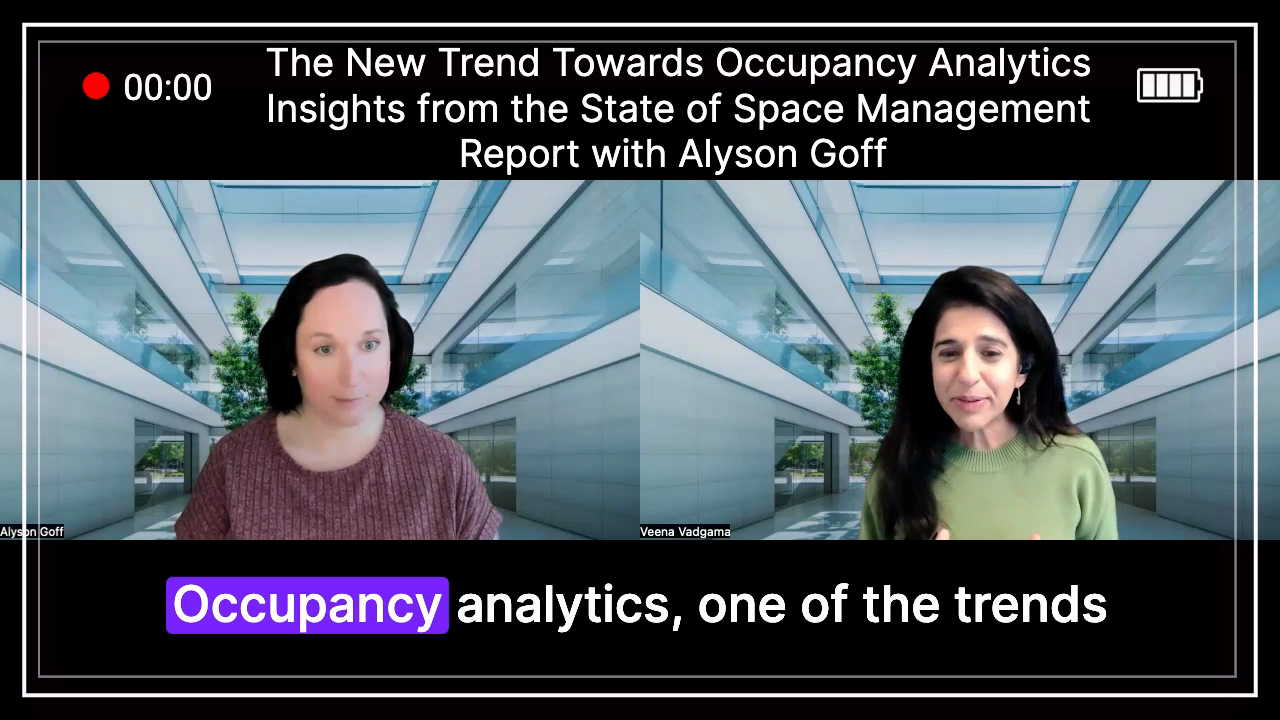
Occupancy analytics is quickly becoming one of the most important tools in higher education space management. In the 2026 State of Space Management in Higher Education report — a joint survey with Huron of 31 universities — nearly 60% of institutions reported they are now using Wi-Fi or sensor-based data to understand how their spaces are actually being used. That is a significant shift from the static space inventories that have been the standard for decades.
In this Bow Tie Tuesday episode, Veena Vadgama, Chief Marketing Officer at CampusIQ, sits down with Alyson Goff, Senior Director of Insights and Strategy, to break down what occupancy analytics means in practice, what institutions are learning from it, and how to get started without feeling overwhelmed.

Veena Vadgama [00:00:00]:
Occupancy analytics, one of the trends that came out in the first annual State of Space Management Report, Lessons from Leaders that was released earlier this year. What is occupancy analytics and why is there a trend going towards occupancy analytics? In fact, one of our institutions said, I believe the greatest challenge in managing space is accurately tracking how it is gonna be used over time. So I wanna say welcome to Alyson Goff, our Senior Director of Insights and Strategy here at CampusIQ. We are going to dive into yet another insight that came out from our State of Space Management report that we released earlier this year. Alyson, welcome.
Alyson Goff [00:00:44]:
Thank you. Happy to be here.
Veena Vadgama [00:00:46]:
We're so grateful to have you talk about space occupancy analytics and how that is sort of shifting and how that's definitely a new trend that's been coming across over the past few years. Could you briefly describe what we mean by occupancy analytics and why there's become this shift towards that sort of data collection?
Alyson Goff [00:01:06]:
Yeah, sure. So simply it's the next level of understanding your space inventory by having true insight into what is actually happening in that space versus what we think is supposed to be happening. And so it really is just giving that next level of perspective and helping space managers, capital planners across the country, think about their space in a different way.
Veena Vadgama [00:01:34]:
What are some of the key takeaways that you're seeing? Maybe six months in with an institution, maybe a year in terms of being able to shift to this way of capturing information and being able to make informed data decisions based off of that.
Alyson Goff [00:01:53]:
Yeah, so I think one data point from the report that seems kind of obvious, but it's worth talking about is that it was almost 97% of the institutions have their spaces cataloged. So they have a space inventory. That's table stakes. But we also work with institutions across the scale of who have maybe a basic inventory, like really just a building inventory, and those that have really robust detailed space inventories that are routinely updated. It's quite the spectrum, but also it's not perfect regardless of where you are in that journey. And so that's really what I think comes through. When we're first working with an institution, whether it's when they're first onboarding or if they're expanding the inventory that they're monitoring occupancy, you start seeing the cracks in the legacy system of how we collect space inventories, how we manage that. And so I think what is helpful when you start looking for occupancy and how do I incorporate that into my business process is this gives you an opportunity to rethink your inventory. How do we manage this? How do we collect this data? And so another data point that I was pleasantly surprised to see is that almost 60% of the institutions reported that they were using occupancy data, whether it was through Wi-Fi or sensors. And so I think the technology's there. It's no longer a technology problem. And it's like, how do we manage our inventory and still gain useful information from the occupancy analytics? And that's what we really spend that six months in — do we have confidence in our inventory? And then if not, how can we update that accordingly.
Veena Vadgama [00:04:00]:
You know, I was actually talking to a customer of ours a few weeks ago. They operate a community college out in Florida, and they have many, many campus locations. And it was a fantastic conversation where he very articulately explained. "Hey, we were doing space inventories. We get a space inventory done, it's static. We would go into a conversation a week later. And the number one thing that would come up — that data's kind of old, or that was last week or that was last month. It's actually not accurate." And so boom, you're in there with near real-time data, occupancy analytics that's being collected day in and day out. Suddenly that pushback is off the table. You're in a completely different set of conversations. And for him, it was an absolute game changer. And so to see these trends, that almost 60% are moving towards this way of collecting the information so they can make the right insights. What is stopping institutions from being able to move towards this live data concept?
Alyson Goff [00:05:03]:
Great question. And I think it's simply an organizational question. Often different reporting structures — where does facilities report? IT? Academic Affairs? And so I think it's not that they don't interact with each other, it's just that it's more transactional rather than as proactive as every group would wanna be. So that's what we find often when we're talking to particularly prospective customers who are like, I'm interested in this. I know that this is the future. This is where we need to be. And honestly, so many people we talk to don't wanna be behind, but they see the barrier as how do we operationalize this? Who owns this? And that's something that is becoming easier to navigate because we have so many customers, whether they're CampusIQ or using other solutions, that are showing how you can do it. And it's not an all or nothing. And that's what I really wanna tell people — I'm gonna say this until it's not true. Occupancy analytics is new, and so it feels overwhelming, but you don't have to do everything at once. Pick a pilot of what questions are most important to us right now. That's what I find has been so successful with a lot of our customers — they start small. And small can be 500,000 square feet, or it could be 5 million. It depends upon the size of your institution. But then they work through their own process and they see, okay, this is what it's gonna take on our end, and then this is the support we get. But more importantly, this is the information we get and the decisions that we can make. So the technology solutions are there. It's just more how am I gonna deploy this and how am I gonna get buy-in from other stakeholders.
Veena Vadgama [00:07:07]:
Excellent. You have an opportunity to work with so many institutions and you've seen them across these journeys. I think this advice of starting with pilots, understanding what their perspective of the floor looks like, where they start, and how they can build on that. Could you please maybe identify one or two of these new metrics that folks are using and how they give color to what's happening across their campus?
Alyson Goff [00:07:34]:
Yeah, so we try to balance with legacy metrics such as the fill rate. That is something that has existed in the higher ed space world for quite some time. And then we also introduce the people minutes per square foot which is essentially looking at the intensity of usage of a space. And that could be a single room to a floor or a building. Then we also have the occupied rate, which is simply just, is anyone present in the space? And so what those three different metrics allow us to do is meet people where they are. So that's really important. If you take away another message — your data will never be perfect. And so don't wait for perfection to get started.
Veena Vadgama [00:08:22]:
Excellent. So Alyson, thank you. Thank you for the time today. Thank you for helping us with one of our insights. For folks that are watching the video, the report is available on CampusIQ.com. You can come and download it. There's a whole host of information there. Alyson, any parting thoughts, any words of wisdom to finish us off today?
Alyson Goff [00:08:41]:
Don't be scared. Let's get started. As you can see, we've got 60% of the institutions are exploring this. And so just start small, ask questions, but this really is the future and it's making the difference today for a lot of institutions across the country.
Veena Vadgama [00:09:00]:
Perfect. All right. Thank you. Thanks for another great Bow Tie Tuesday, and have a great rest of your week.


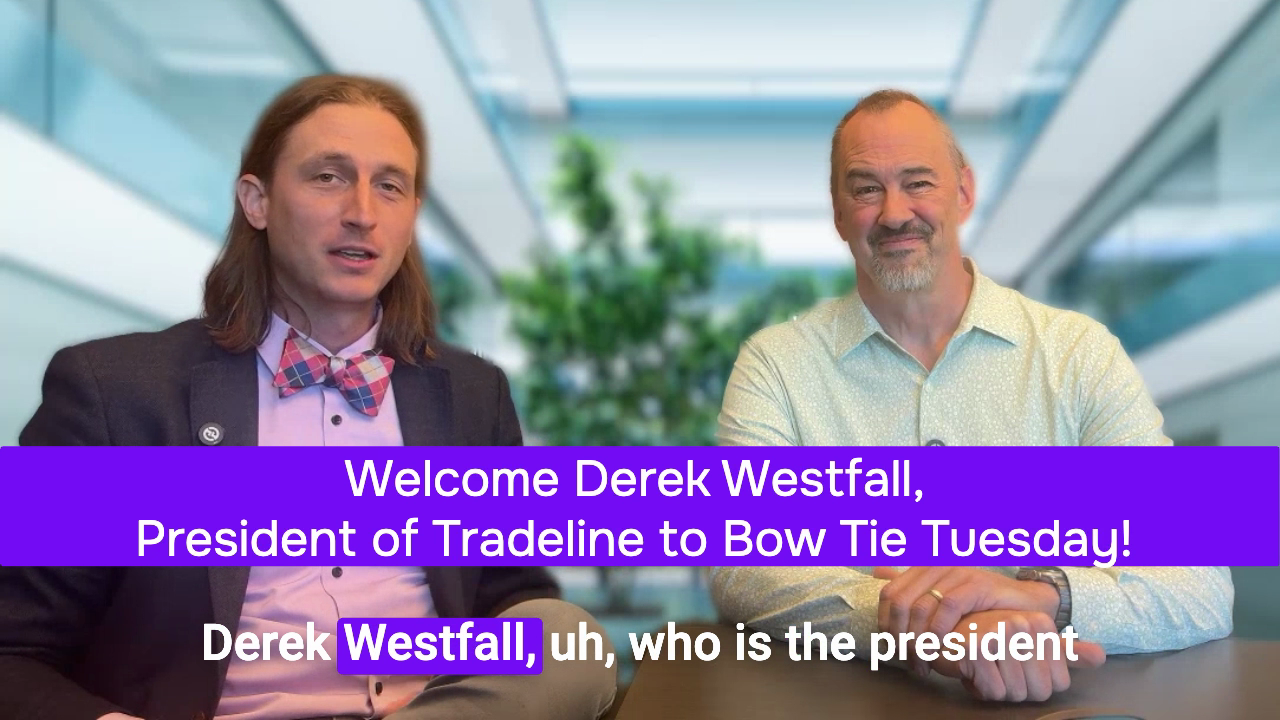
Space Utilization Is Now Mission-Critical: Tradeline Insights with Derek Westfall (Campus & Facilities Strategy)

2 min read

Space Utilization Is Now Mission-Critical: Tradeline Insights with Derek Westfall (Campus & Facilities Strategy)

When budgets are tight, smart campuses don’t stop—they optimize. In this Bow Tie Tuesday conversation, Aaron sits down with Derek Westfall
Read More
Do Your Spaces Drive the Mission? Space Planning with Chris Morett

7 min read

Do Your Spaces Drive the Mission? Space Planning with Chris Morett

🎀 Bow Tie Tuesday is here. When campus space truly drives the mission, everything works better. In this week’s conversation, Chris Morett,...

Read More