2 min read

Your Campus Has Space Governance. Here's Why It Probably Isn't Driving Real Decisions.

Your Campus Has Space Governance. Here's Why It Probably Isn't Driving Real Decisions.
4:54

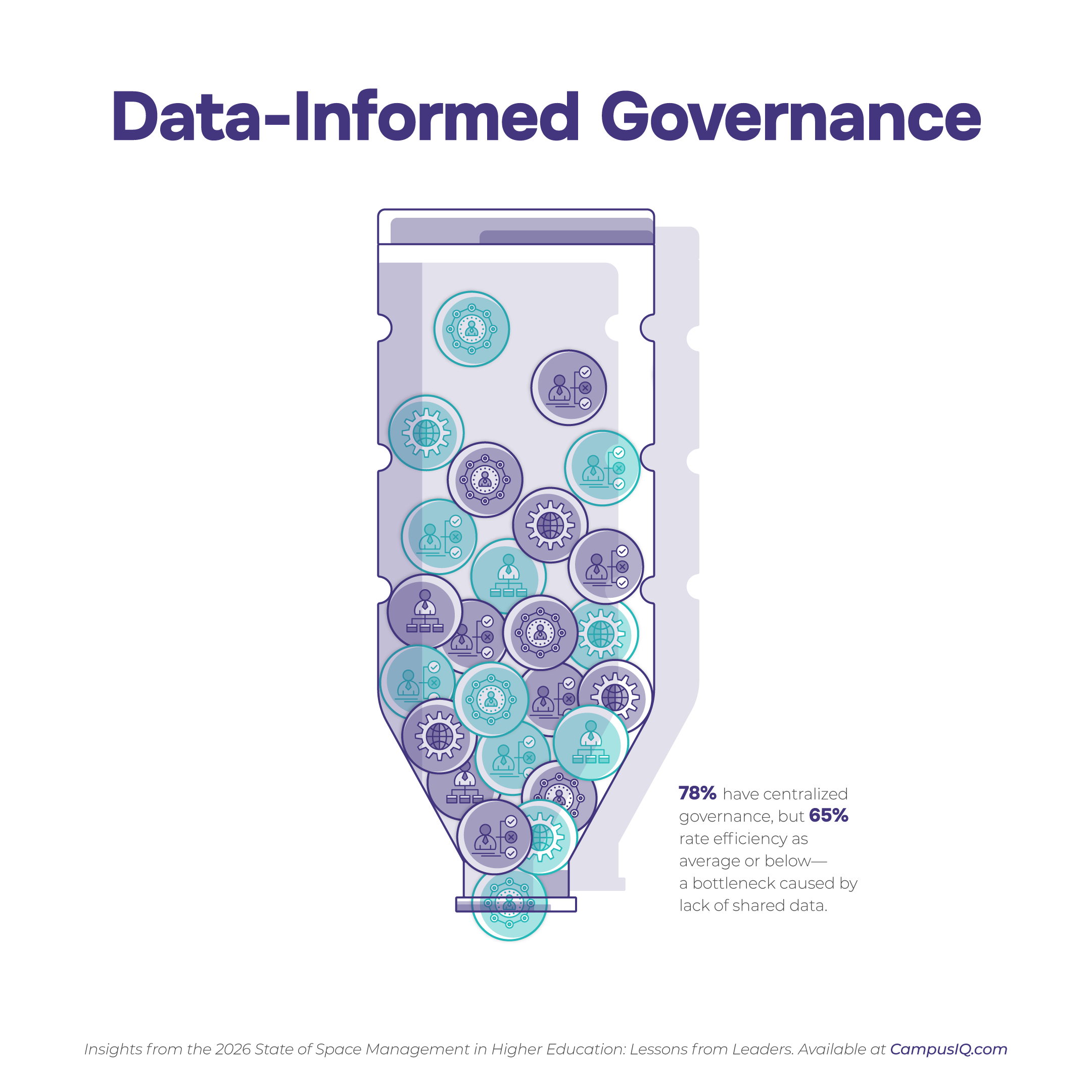
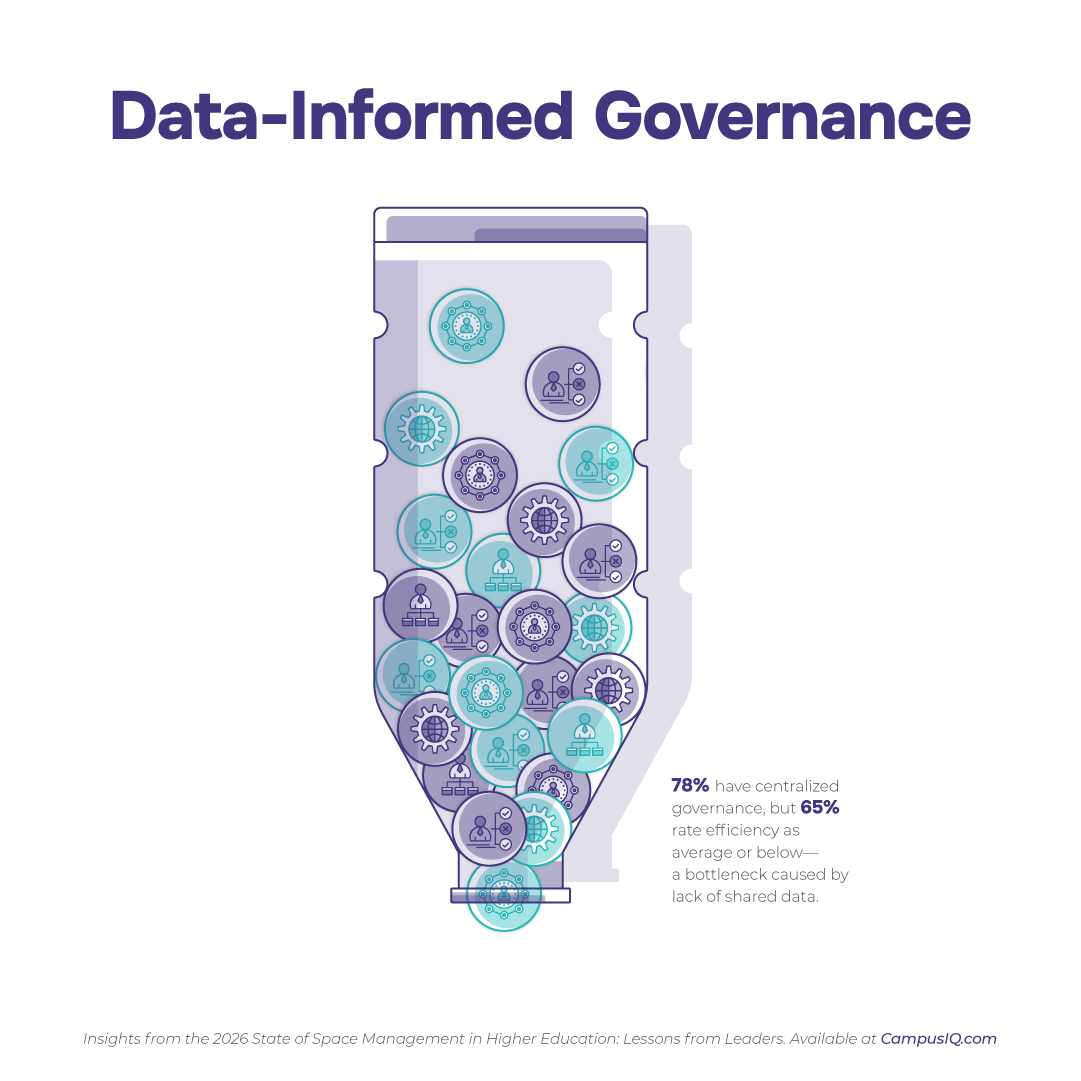
78% of institutions have centralized governance over campus space. 90% have a named person responsible. On paper, that sounds like the problem is solved.

But when we asked how effective that governance really is, 65% rated their governance efficiency as average or below.

So what is going wrong?

That is the question we explored in the latest 2026 State of Space Management in Higher Education report, a joint survey with Huron of 31 universities across North America. The findings suggest that having a governance structure and having effective governance are two very different things.

Structure Alone Does Not Equal Strategic Decisions

Many institutions have the pieces in place: a committee, a responsible leader, a set of policies. But the data reveals a disconnect between having a framework and actually using it to make strategic space decisions.

One survey respondent put it bluntly:

"The current structure includes too many members, often turns meetings into information sharing and listening sessions rather than serving as a true governance body where strategic direction, planning, and effective space management can occur."

This is a pattern Alyson Goff, Senior Director of Insights and Strategy at CampusIQ, sees regularly in her work with institutions. "There is this misconception that if I have a campus master plan, then I can make strategic space decisions, and that is not true," she explained on a recent Bow Tie Tuesday episode. "It is very transactional in many institutions. There is a space request, some type of assessment, a rubric is applied, and then we are allocating or saying yes or no."

The result: governance that checks a box rather than drives meaningful outcomes.

Insight-4_Social-1

What Effective Governance Actually Looks Like

Not all governance structures fall short. Some institutions have found models that work — and the common thread is intentional design around who makes decisions, what authority they hold, and how they are supported.

George Mason University, for example, uses a tiered approach:

  • An executive decision-making body of three to five vice presidents who own the major decisions
  • An advisory committee with delegated authority for decisions under a certain square footage threshold
  • Subject matter subcommittees composed of faculty and staff who bring discipline-specific expertise and serve as grassroots champions

This structure keeps committees lean where speed matters and inclusive where buy-in matters. It avoids the common trap of putting everyone in the same room and ending up with meetings that could have been an email.

The Data Changes the Conversation

Here is where the report gets interesting. 95% of institutions still rely on registrar data or course schedules as their primary source for space decisions. But 39% are now incorporating real-time occupancy insights — and it is changing the dynamic.

When everyone can see the same data tied to their spaces, governance shifts from political territory battles to evidence-based conversations. "It depersonalizes the conversation," Goff noted. "It is suddenly not about who owns the room. It is what does the data show."

Data does not just improve the quality of decisions. It accelerates them. When multiple semesters of occupancy trends are available, committees can get to patterns and insights quickly rather than relying on anecdotal evidence or gut feelings about how spaces are used.

Where to Start

Governance does not have to be complex to be effective. For institutions looking to strengthen their approach, the report and our conversations with practitioners point to a few fundamentals:

  1. Keep the decision-making body small. Executive committees of three to five members make faster, more accountable decisions than large groups.
  2. Delegate with clear authority. Advisory committees work when they know exactly what decisions they are empowered to make.
  3. Build grassroots champions. Subject matter subcommittees give faculty and staff a voice without slowing down the decision-making process.
  4. Ground conversations in data. When space decisions are informed by real utilization data rather than assumptions or politics, trust increases and better outcomes follow.

As Goff put it: "Do not be scared about governance. Start lightweight, put a framework around it. It really will make a difference in how you and your institution manage space."

Go Deeper

Watch the full Bow Tie Tuesday conversation with Alyson Goff on data informed governance: Watch on YouTube

Download the full 2026 State of Space Management in Higher Education report for insights from 31 institutions on how they are rethinking campus space: Download the Report

Privacy & Data Governance in Higher Ed - An Open Invitation

Privacy & Data Governance in Higher Ed - An Open Invitation

At Degree Analytics, we recognize how much of a gap exists, and continues to grow, between privacy and the pursuit of a better campus and student...
Read More
Research Labs: Higher Ed's Most Expensive Blind Spot

Research Labs: Higher Ed's Most Expensive Blind Spot

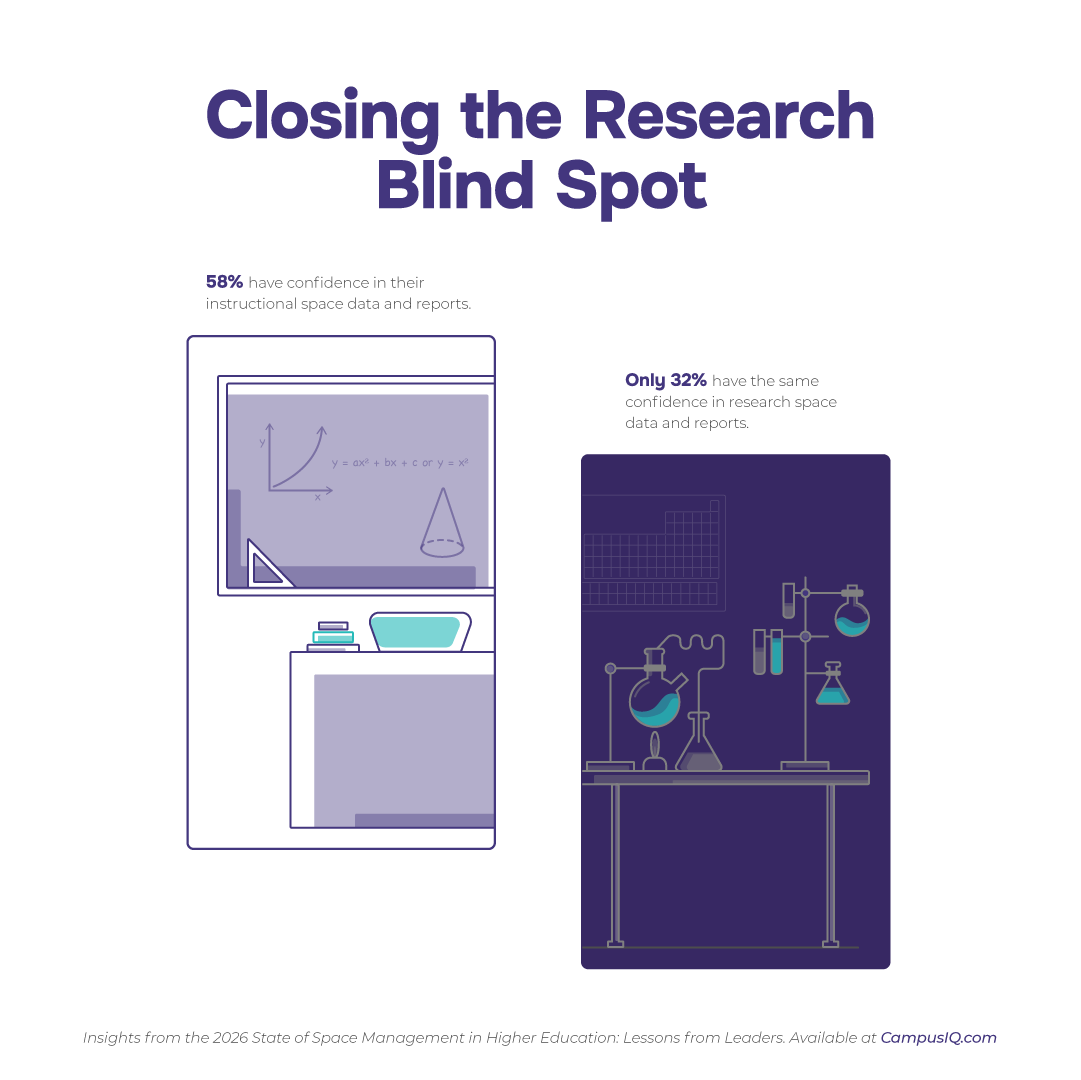
When CampusIQ and Huron surveyed 31 universities across North America for the 2026 State of Space Management in Higher Education report, one finding...

Read More