When Design Strategy Meets Occupancy Analytics: A Conversation with Shannon Dowling

[00:00:00] Alyson Goff: We've spent years collecting space data, but what if we have been asking the wrong questions? Today we dive into what actually happens when design strategy and occupancy analytics collide, and why the future depends on it.

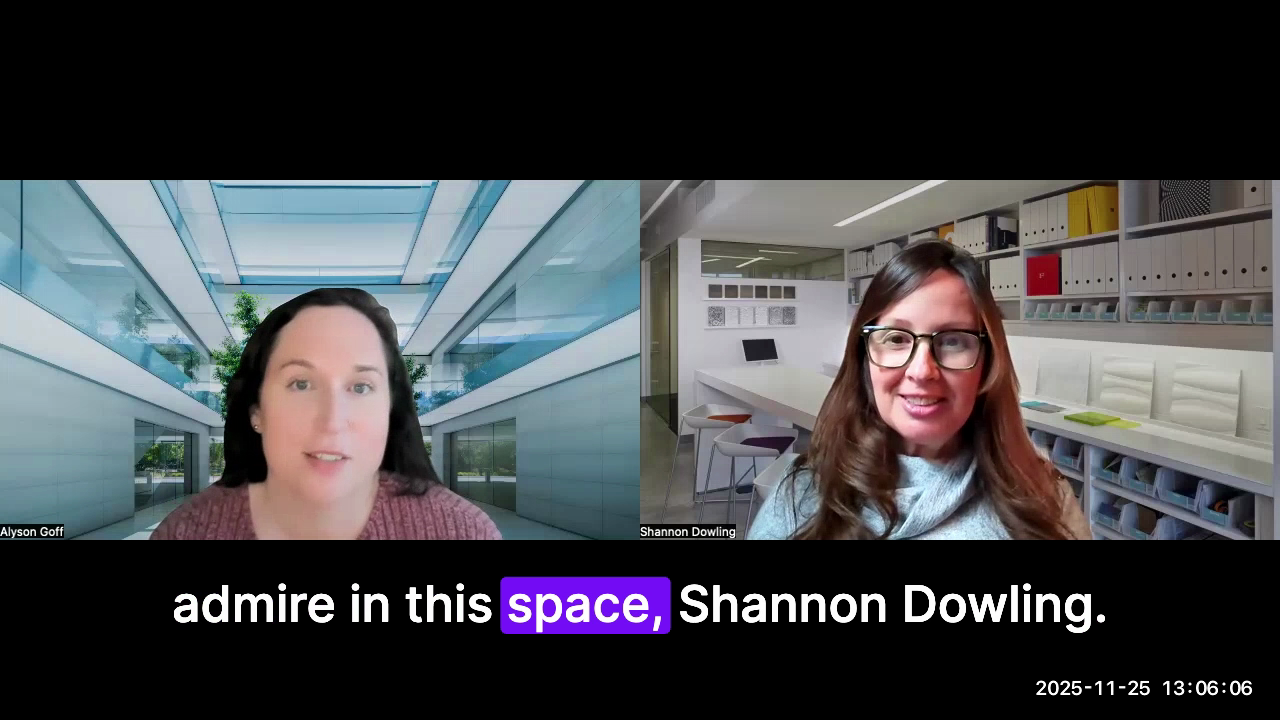
Why are design teams and analytics platforms still operating in separate worlds? This conversation breaks open what could happen when those two forces finally work together and the impact it could have on every campus. Welcome to another Bow Tie Tuesday. I am joined by someone I've had the privilege of working alongside and someone I deeply admire in this space, Shannon Dowling. She brings a rare blend of design, research, and insight into how learning environments truly shape the student experience.

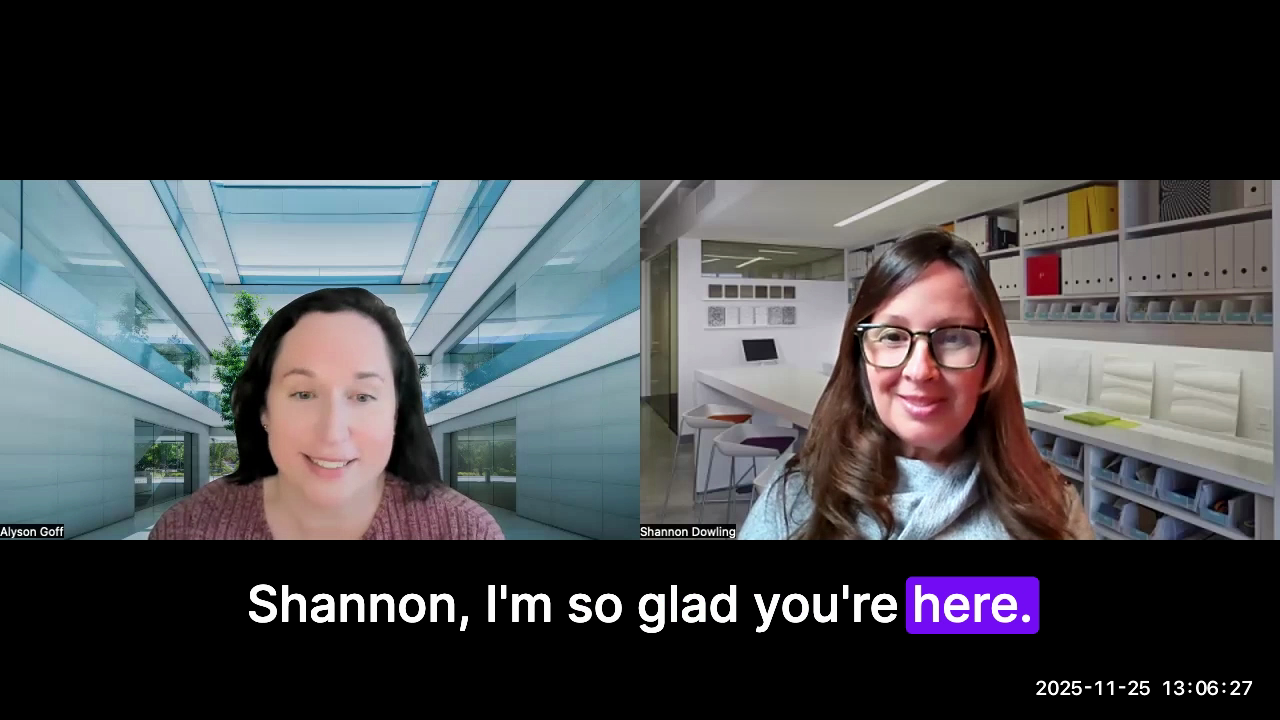
We're talking about where campuses need to evolve, how student behavior should drive design decisions, and why design and analytics working together is the future. Shannon, I'm so glad you're here. 

[00:00:55] Shannon Dowling: Thanks for having me. 

[00:00:56] Alyson Goff: So you're a researcher, designer, educator, trend watcher. [00:01:00] Which of these identities most shapes how you think about learning environments today?

[00:01:04] Shannon Dowling: Sure, and I think that's a hard question 'cause I feel like the mesh of all these identities kind of defines who I am. But I feel like that the research piece of that is what differentiates me and how I approach design. It keeps me in this state of active learning myself. It forces me to listen and to stay curious.

I feel like the trend watching is a way to do environmental scans, do steep analyses, literature reviews. These are like those tools that evoke curiosity and deepen understanding. And then the educator in me keeps me in touch with the student needs and experiences. And then the designer translates that into the built form, which helps me make the world a little bit more human.

[00:01:47] Alyson Goff: So what's a future trend in student behavior or campus life that institutions just aren't prepared for? 

[00:01:57] Shannon Dowling: It is really fun. I'm, I'm, I'm curious if you've heard me [00:02:00] say this before, 'cause it's something I've been saying for years now, but I feel like there's this slow erosion and eventually the Carnegie unit is gonna disappear altogether as this sort of organizing principle of undergraduate learning.

So we've built. Pretty much education in general around this whole buts and seats mentality and space utilization. You know, it calibrates us for fixed hours. It calibrates us for fixed schedules. It calibrates us for fixed utilization patterns. But we're moving towards this world. We're learning is more self-paced, more competency based and mastery driven.

It's not attendance driven, and I don't know if campuses or architects are prepared for what that means physically. It's like students still want the physical campus, they still wanted as this place to live and learn together. Um, and we're preparing for demographic shifts. We're preparing for, you know, financial shifts, but I don't know if we're preparing for the scheduling paradigm that I feel [00:03:00] like is on the horizon.

[00:03:02] Alyson Goff: Yeah, no, that's really interesting. So I'm curious if you could double click on that and just, you know, kind of expand for the audience of what do you mean by that scheduling shift? 

[00:03:12] Shannon Dowling: I think that scheduling is going to shift from something that is more driven by fixed environments to something that's more driven by co-creation and by student learning and by students being able to curate not only their own degrees, but their own pathways to those degrees. I feel like students, they often graduate high school and they go to college thinking, okay, now I get to only learn what I wanna learn and I wanna, I get to ask my own questions and solve my own curiosities. And then they get there and it's like, no, actually you're gonna go meet in this building from nine to 10, and then you're gonna shuffle across campus.

And I just, I think eventually people are gonna vote with their feet and say no. 

[00:03:55] Alyson Goff: Yeah, no, definitely. That's definitely really interesting. So when you're walking into a [00:04:00] learning space, or maybe more broadly thinking about a student space what tells you that it's truly successful?

[00:04:07] Shannon Dowling: I think a student space is successful if you can adapt to it and you can, um, sort of navigate it without accommodations or negotiations. So, can, if you're, it's a little too dark, can you turn on the lights a little brighter? If you're cold, can you adjust the temperature? Can you, you know, hook up your technology without having to cry or, you know, call IT for help.

So it's almost like the success in the, in the most successful rooms, the room itself disappears because it doesn't become this barrier that it detracts you from the experience of learning. 

[00:04:42] Alyson Goff: I think you've kind of already touched on this, but and I'm probably asking a leading question, but what's the biggest misconception that institutions still have about what makes a space effective? 

[00:04:56] Shannon Dowling: Um, I. So it's hard to name one biggest [00:05:00] misconception, but I think some misconceptions that I personally run into is that people think that you can make, you can add flexible furniture and you can add whiteboards and you automatically get active learning in a classroom.

Even though you've added, you've replaced the chairs one for one, and people can't actually even get to the whiteboard. So you haven't actually changed the way the space operates. And in that same coin, I think we also imagine that changing a room is going to automatically change that. The type of teaching that goes on in that room.

And we often change a room, but we don't orient faculty members. We don't provide any training. We don't do anything to build their confidence in using that room. And so therefore you've just wasted those resources. Um, and then on the flip side of that, we often train instructors. We offer these courses and active learning and best practices, but then we go and we put [00:06:00] them back in the auditoriums and in the fixed lecture halls. And I think they can be more effective, but they still have to fight the room. Mm-hmm. Instead of using the room as this tool that elevates an experience for everybody. So I feel like we've just got this mismatch going on between what we design, and who do we design for, and how we bring everybody into the conversation.

[00:06:22] Alyson Goff: No. Absolutely. And I, I know you've done a lot of classroom master plans over the last few years. And so I, I'm curious, just because we know that that's not an easy - the reality that you just described, that's not something that we can change overnight. You know, kind of like how, you know, working with, you know, I think of like three or four institutions off the top of my head that you've worked with in developing these comprehensive plans.

If there's an institution, watching today that is just like, yes, that's my campus. And where do I start, how do they get, you know, how do they start affecting change on their [00:07:00] campus? 

[00:07:00] Shannon Dowling: Yeah, and I think that we always say like, it's not just about physical space, but it's also about policy.

It's also about, um, scheduling and it's also about giving students the right amount of time outside of the classroom so that they can participate inside the classroom. It. It's like you have to layer on a bunch of different ingredients in order to get the tools to success. And you know, I know like a lot of times, for instance, we look at these schedules and we see that nobody wants to teach before nine o'clock, and it might just be as simple as, that's when i nstructors like put their children on the school bus and if, uh, if they have to teach an eight o'clock class, that means they have to pay for before care for school. So I think it's always, it's just these sort of layered nuances and experiences that we have to get to, to make something more impactful.

And we can assume that like one ingredient is gonna solve the equation by itself. 

[00:07:59] Alyson Goff: [00:08:00] Yes. Absolutely. So you, um, I. This does not make me popular with, uh, designers or architects, but I, I often say not all solutions are physical. Yeah. And I think, you know, you just hit on that of it's not always scheduling policy.

It's not always, faculty, member X doesn't wanna teach or students don't wanna take it. It there's the other reality 'cause again we're human beings and thinking about the full experience and what are the other factors. So I, I think, you know, kind of what I'm hearing is, yes, this isn't an easy problem to tackle, but it's kind of understanding the different inputs, um, having conversations.

Hi, Alyson here. My interview with Shannon Dowling was fantastic. In fact, we decided to make a part two so we can continue the conversation next week. I hope you enjoyed Shannon's insights into design and how she calls out many misconceptions and identifies opportunities for change. Next week, join us again as we cover more on the side of analytics and post [00:09:00] occupancy evaluations.

See you then.


Veena Vadgama

About Veena Vadgama

As CampusIQ’s Chief Marketing Officer, Veena is leading marketing to position the company as the go-to name in space intelligence for higher education. Veena holds a BBA in Marketing from UT Austin and a Master’s in Public Affairs from the University of Minnesota. A proud Longhorn and Gopher, she’s eager to help higher ed thrive.

Comments (0)

Leave a Comment